
TE03 200 W wireless power module: temperature-rise and FOD tests
- # E-mobility
- # Efficiency & heat
- # Foreign object detection
In Designing a cost-effective, efficient contactless e-scooter dock, we explained why the efficiency of TE03, Tseetech’s 200 W mid-power wireless power solution, matters. In real applications, however, people care more about safety and user experience than about the efficiency figure itself.
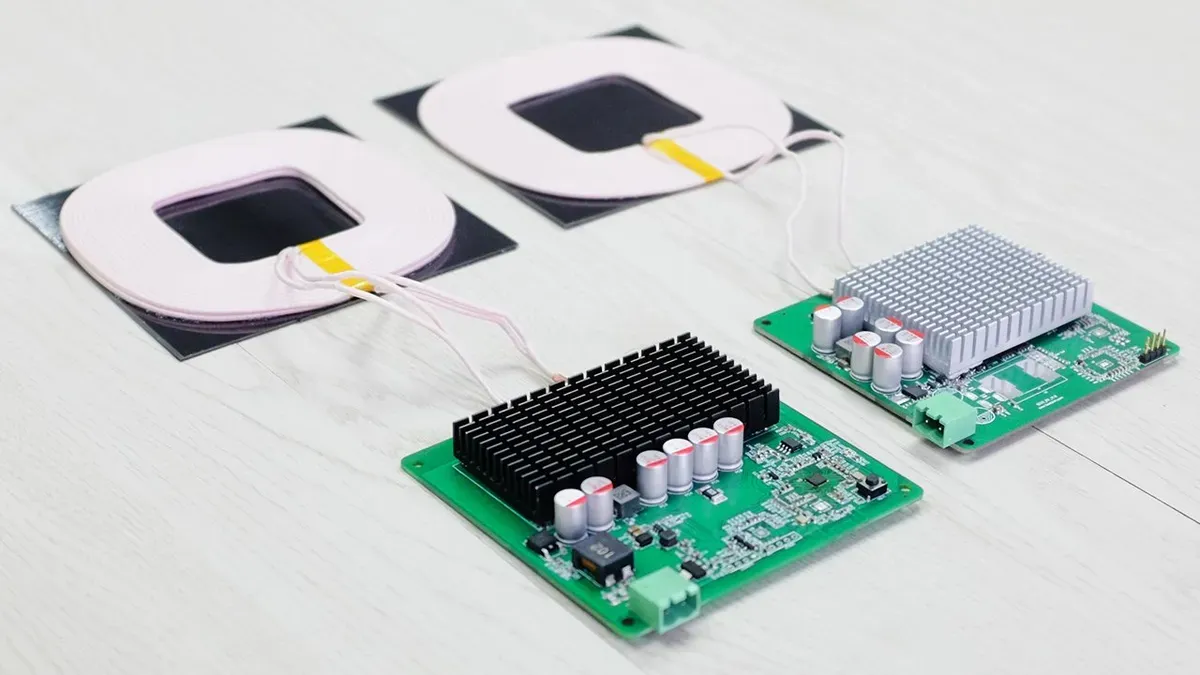
Tseetech TE03 transmitter and receiver modules
We ran several tests to check that this module pair operates safely and reliably.
First, we checked the temperature rise. At a room temperature of 24.9 °C, with a coil-to-coil distance of 20 mm, the receiver module delivered 200 W continuously for one hour. We then measured the module pair with a Fluke VT04A infrared thermometer. The transmitter coil reached a maximum of 42 °C, the transmitter PCBA 67.9 °C and the receiver PCBA 58.3 °C.
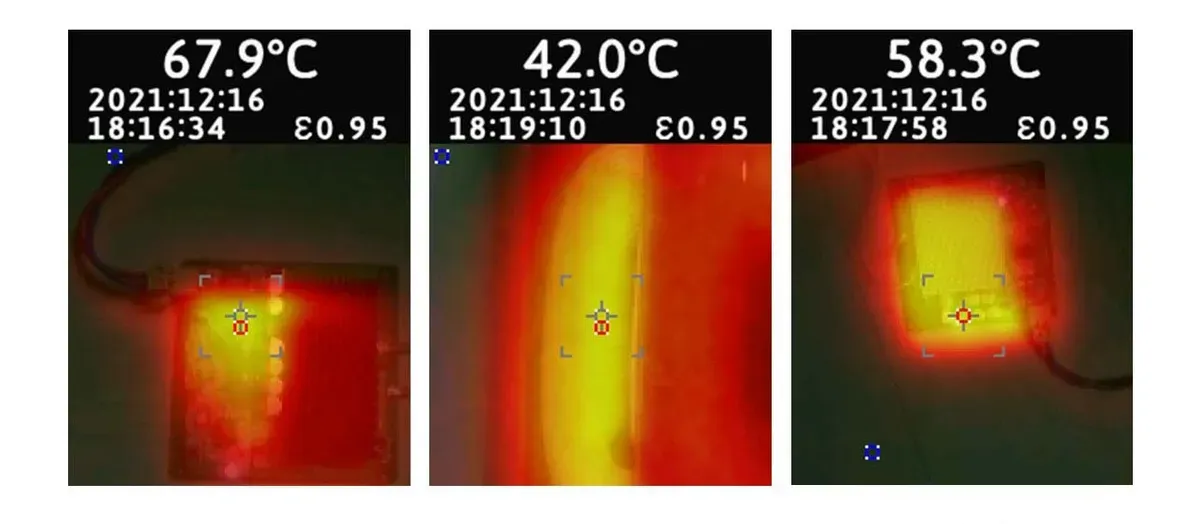
TE03 20 mm temperature-rise test
Next, we increased the coil-to-coil distance to 35 mm, the upper limit of TE03, and again ran the receiver at 200 W for one hour before measuring with the Fluke VT04A. The transmitter coil reached a maximum of 53.4 °C, the transmitter PCBA 68.8 °C and the receiver PCBA 55.3 °C.
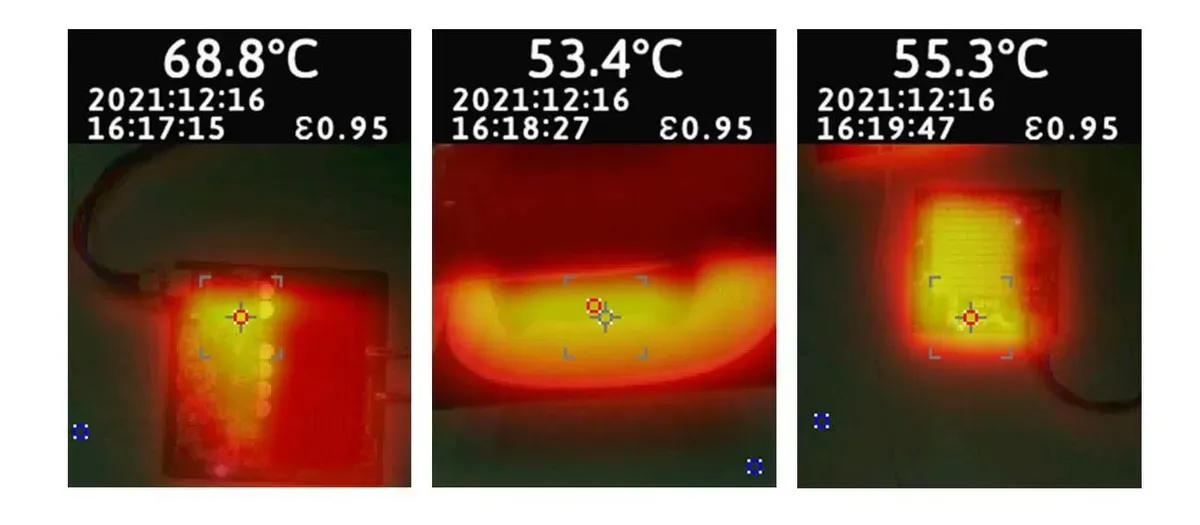
TE03 35 mm temperature-rise test
The temperature rise of the whole module pair is within an acceptable range. Under these test conditions, this supports use in mid-power wireless charging applications.
In wireless charging, the strong magnetic field heats any metal object that falls into the charging area, through the eddy currents induced in it. Wireless charging systems therefore need foreign object detection (FOD) to operate safely. Tseetech uses its own FOD algorithm to detect metal objects quickly and protect the whole system.
We tested foreign object detection in two situations: before power transfer and during power transfer. First, before power transfer, we placed a small coin on the transmitter coil. The transmitter detected it immediately, did not start charging and lit a red warning light.
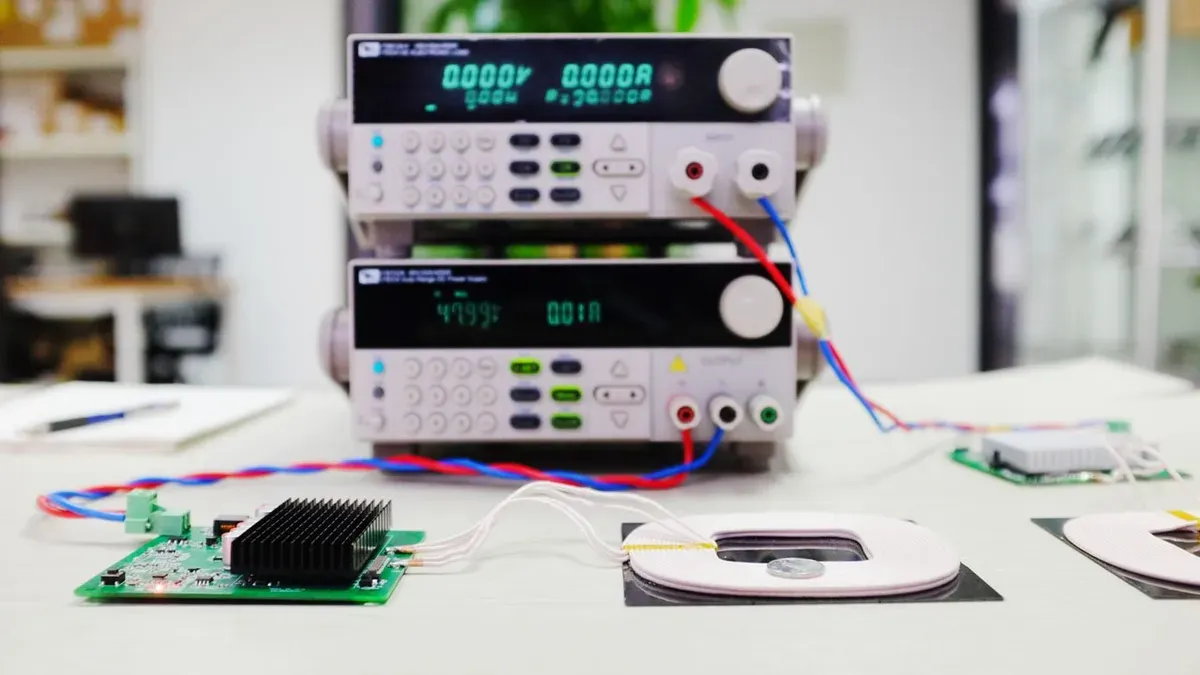
We then removed the coin and placed the receiver module in the charging zone at a coil-to-coil distance of 20 mm. While the receiver delivered a steady 200 W, we slid a small coin into the charging zone; the transmitter detected it immediately, switched off the magnetic field and lit a red warning light.
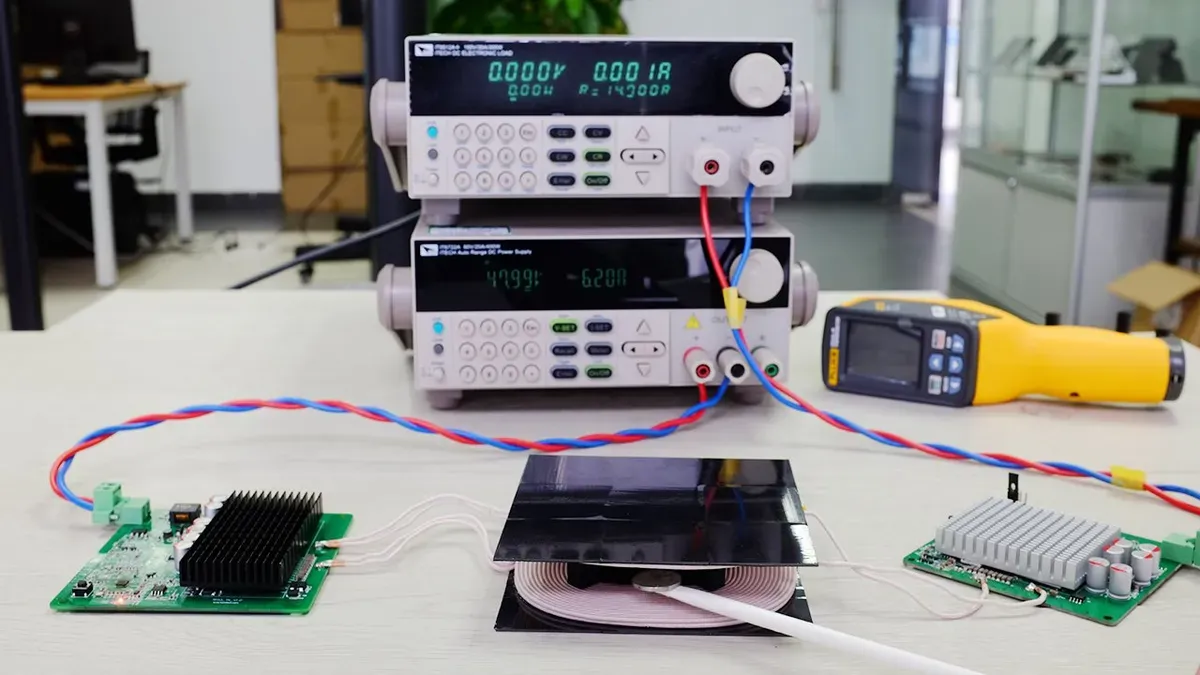
When we removed the coin, charging resumed normally. We repeated the same steps at a coil-to-coil distance of 35 mm: with the receiver delivering a steady 200 W, we slid a small coin into the charging zone, and the transmitter again detected it immediately, switched off the magnetic field and lit a red warning light.
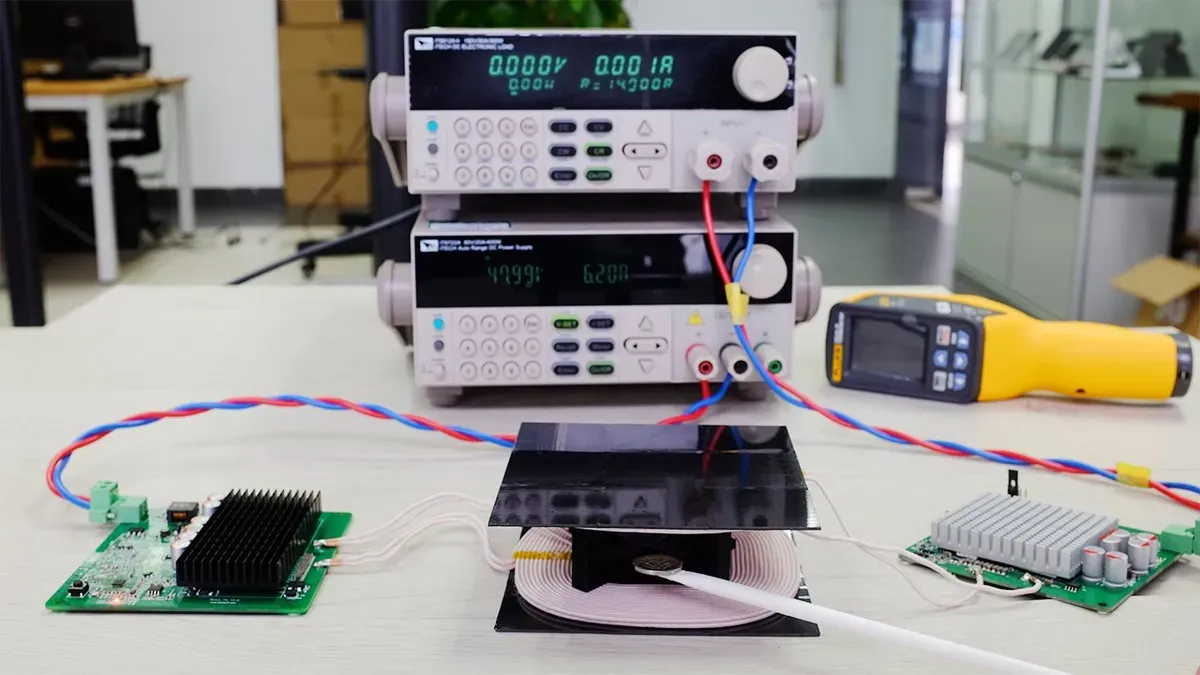
Following these steps, we tested coins of several sizes at each distance, in standby and during operation; the TE03 triggered its protection in every case we tested.
| Distance | Standby: S coin | Standby: M coin | Standby: L coin | Operating: S coin | Operating: M coin | Operating: L coin |
|---|---|---|---|---|---|---|
| 15 mm | ✓ | ✓ | ✓ | ✓ | ✓ | ✓ |
| 20 mm | ✓ | ✓ | ✓ | ✓ | ✓ | ✓ |
| 25 mm | ✓ | ✓ | ✓ | ✓ | ✓ | ✓ |
| 30 mm | ✓ | ✓ | ✓ | ✓ | ✓ | ✓ |
| 35 mm | ✓ | ✓ | ✓ | ✓ | ✓ | ✓ |
TE03 FOD test results
These results show that TE03 delivers the main benefits of contactless charging for mid-power applications: convenience, safety and robustness. The solution is cost-effective and ready for mass production. Contact us to discuss your project.