Shared e-scooter docks: contact or contactless charging?
- # E-mobility
According to Wikipedia, a scooter-sharing system is a shared transport service in which electric motorized scooters (e-scooters) are made available for short-term rental. E-scooters are typically “dockless”: they have no fixed home location and are picked up and dropped off anywhere within the service area.
In 2012, Scoot Networks launched short-range rentals of moped-style scooters. In 2017, Bird and Lime introduced dockless electric kick scooters. After launching in Santa Monica, California, Bird expanded to more than 100 cities and reached a valuation of US$2 billion in 2018; in the same year, Lime recorded more than 11.5 million rides. Lyft and Uber, the largest ride-hailing companies in the US, launched their own e-scooter sharing services in 2018. By 2030, the global e-scooter market is expected to be worth US$300–500 billion.
The dockless model has problems, however, and the most serious is management cost. Operators have to hire people to collect e-scooters for charging or battery swapping, and city governments have to deal with e-scooters abandoned at random around the city. As a result, many cities are limiting dockless e-scooter deployments.
From a city’s point of view, the goal is to give everyone access to green public transport, which means making sure people can find an e-scooter when they need one. A docked model is the simplest way to achieve that.
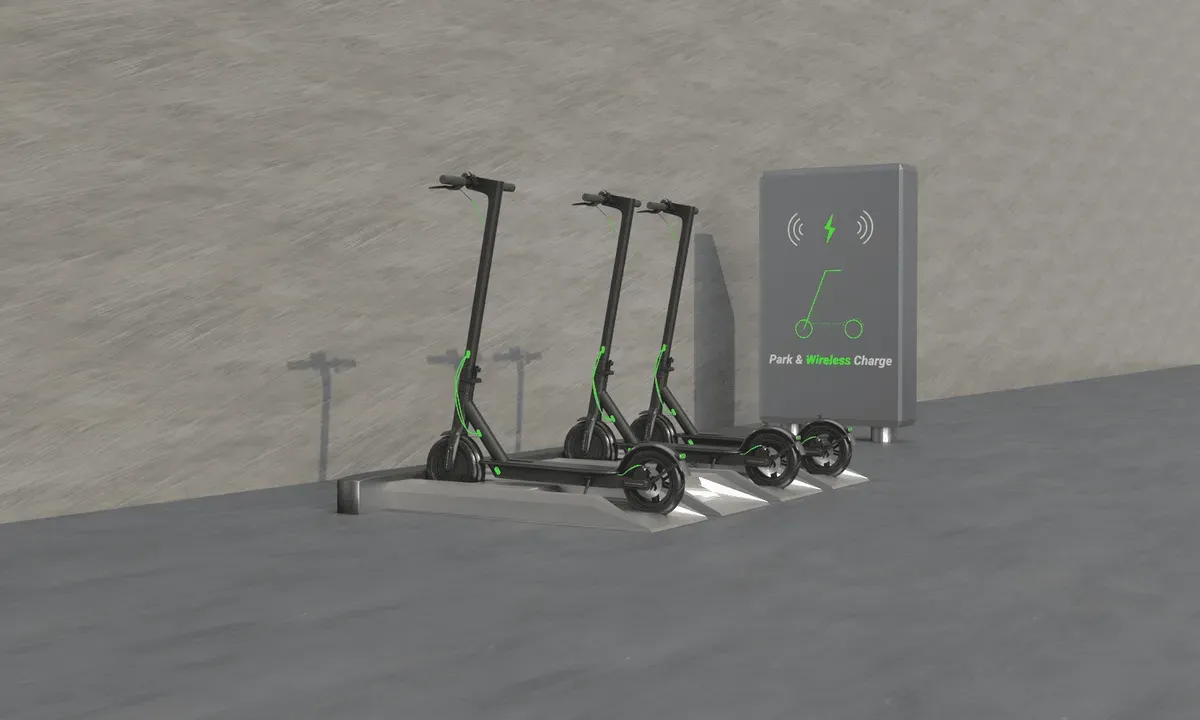
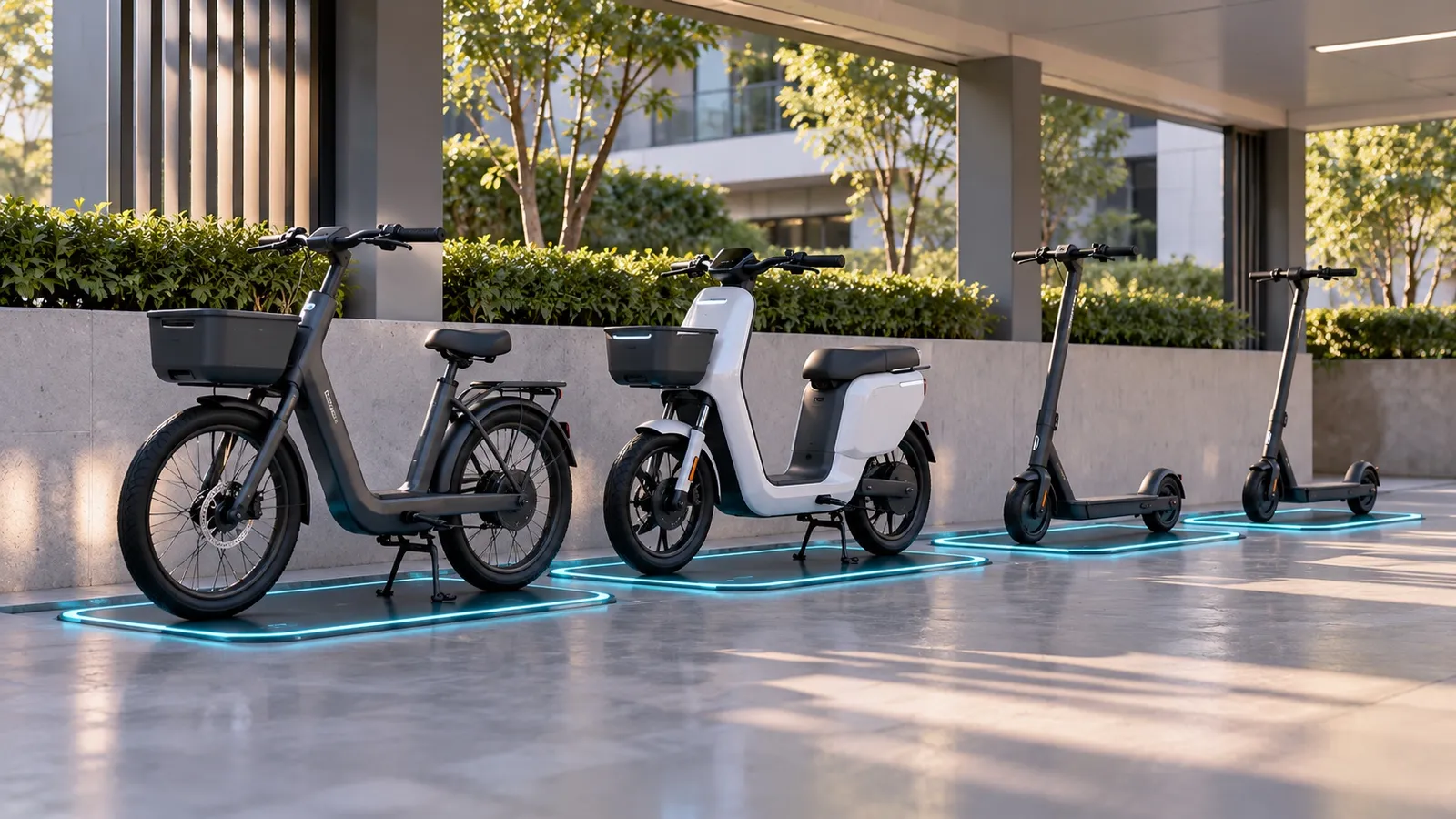
Many companies are therefore developing parking docks for e-scooters, and naturally these docks should charge the e-scooters while they are parked.
In Europe and North America, dock developers mostly use contact charging; Kuhmute, Duckt and Knotcity are among the best-known.
Korea has taken a different approach. LG Electronics has announced a contactless charging dock for e-scooters, and at least two other companies in Korea are designing and deploying contactless e-scooter charging docks.
We think e-scooter charging docks will follow the history of phone charging: some early phones charged through contacts, but phones today charge without contacts, using wireless charging.
Reliability is the main reason contactless charging replaces contact charging. Charging happens every day, and repeated docking and undocking wears the contacts until they start to fail. Few things are more frustrating than a charger that does not charge. Because everything is sealed, contactless charging stays reliable over a long service life.
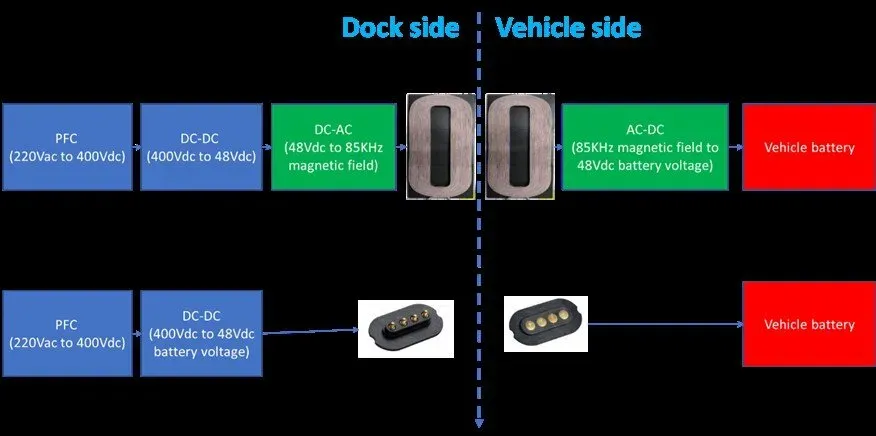
Contactless charging has a further advantage: it keeps charging even when an e-scooter is not parked perfectly in the dock. It does, however, cost more than contact charging. The figure below compares the two: contactless charging needs an additional DC-AC stage on the dock side and an AC-DC stage on the vehicle side, and sealed coils replace the exposed contacts. This extra cost makes developers and operators hesitate to adopt contactless charging in their dock designs.
Tseetech set out to remove these barriers to contactless charging in e-scooter docks. Our wireless power modules balance cost and performance, so you can bring contactless charging into your dock design without a large cost penalty. Contact us to discuss a solution for your project.