
Wireless power transfer, from Tesla to today's phones
- # Consumer electronics
The idea of wireless power transfer goes back to Nikola Tesla more than 100 years ago, but it only became mainstream after Apple brought wireless charging to the iPhone in September 2017.
According to recent research by Strategy Analytics, more than 1 billion phones with wireless charging will be in use by the end of 2021: 49% in Asia-Pacific, 21% in North America and 16% in Western Europe.
Like it or not, almost everyone will soon have a phone with wireless charging. Some people will not buy a wireless charger for it and will keep using a cable at home. But if you found a wireless charging spot in a public place, such as a restaurant or on a train, and you had forgotten your cable, would you use it? We think most people would say yes.
So how can wireless charging be made available everywhere? Tseetech’s through-surface chargers deliver up to 15 W to a phone placed 10 mm to 50 mm above the charger. They can be installed beneath almost any non-metal surface, making ubiquitous charging practical.
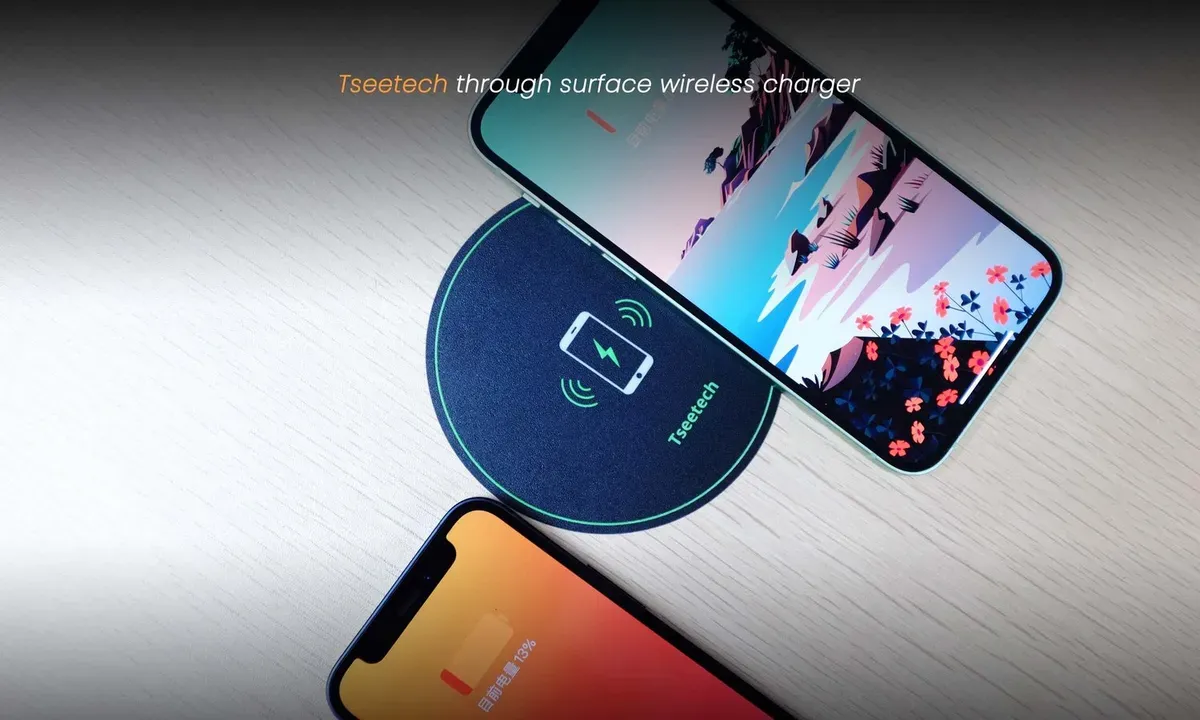
How do we do it? Several techniques work together: a double-layer coil winding method that strengthens coupling, a magnetic shield structure that concentrates the magnetic field, firmware for foreign object detection and charging-distance adjustment, and synchronization and demodulation algorithms that accommodate phones with different handshake mechanisms.
We believe phones are only the first application of wireless power transfer. Any product that needs electricity can be powered safely this way, whether by charging its battery or by supplying the system directly. Building on our through-surface charger technology, Tseetech has developed wireless power module pairs covering a range of power levels (production models up to 800 W, with higher power available as a custom design; see each model page for gap and efficiency). Our modules are used in, among other things, electric two-wheelers, 5G CPE, patrol robots and medical equipment.
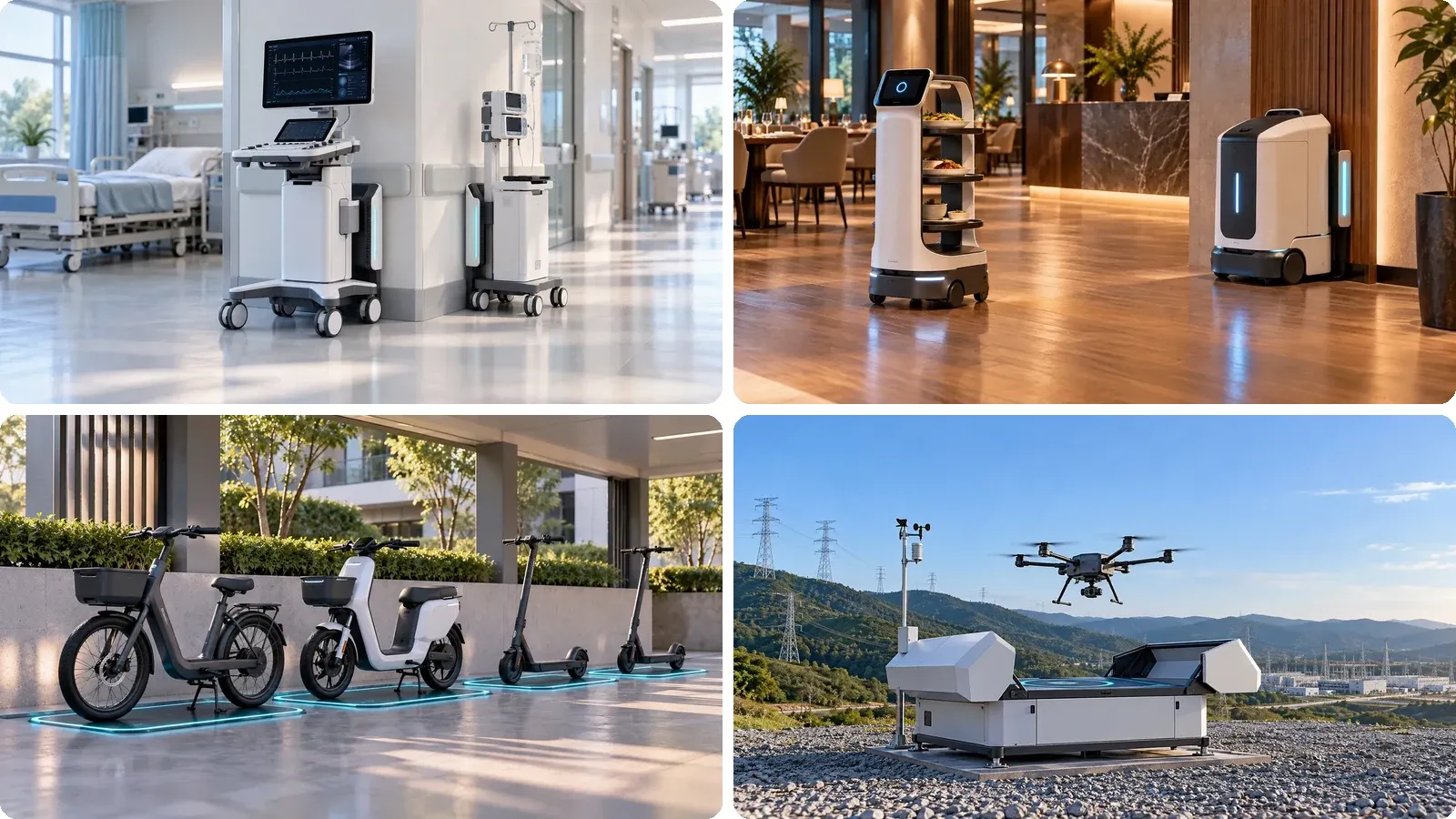
However good the technology, what matters most is how well it is applied in the end product. Only by working closely with device manufacturers on integration, and solving problems such as heat dissipation and mechanical robustness, can end users get the full benefit of wireless power. Custom design is a core part of what we do, and we welcome any company interested in adding wireless power to its products.
We look forward to discussing your wireless power needs and supporting your projects. Contact us to get started.